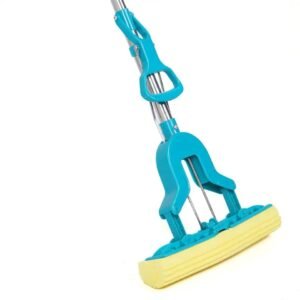
Wood-pulp sponge · Pull-rod fold squeeze · 6 heads per set
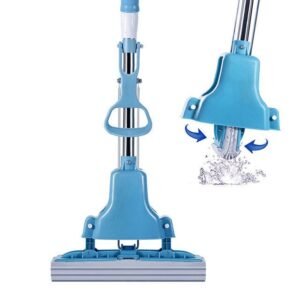
A pull rod beside the pole folds the hinged head in half and squeezes the cellulose sponge without wet hands; four twist caps hold each sponge, so a worn one is swapped in a minute.
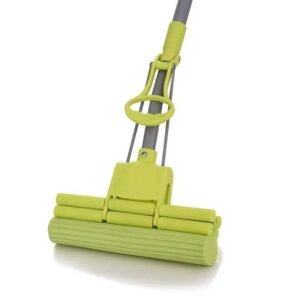
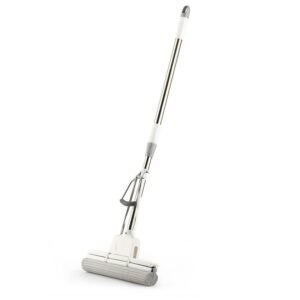
A flat mop with a wood-pulp cellulose sponge on a hinged blue head. A pull rod running beside the iron pole folds the two halves of the head together, squeezing the sponge between them so the water runs out without the sponge being touched.
Each sponge is held by four twist caps through the head plate, and the set ships with six sponge heads.
01 · Twist caps hold the sponge
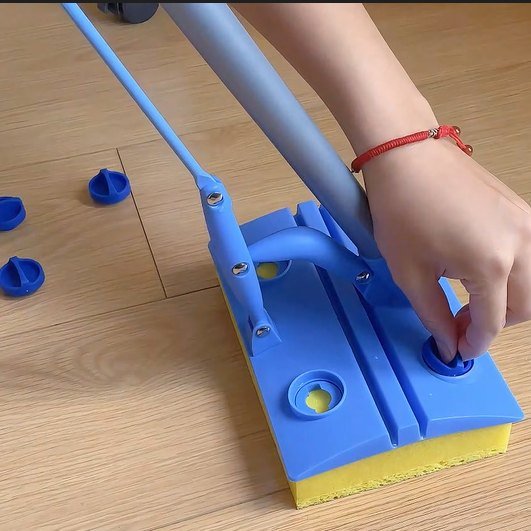
The sponge sits under the blue plate and is locked by four caps pushed through the plate and turned. To change a worn sponge, the caps are turned out and the next sponge is fixed the same way.
Four caps — hold the sponge flat to the plate.
No tools — the caps are turned by hand.
02 · For spills on tiled floors
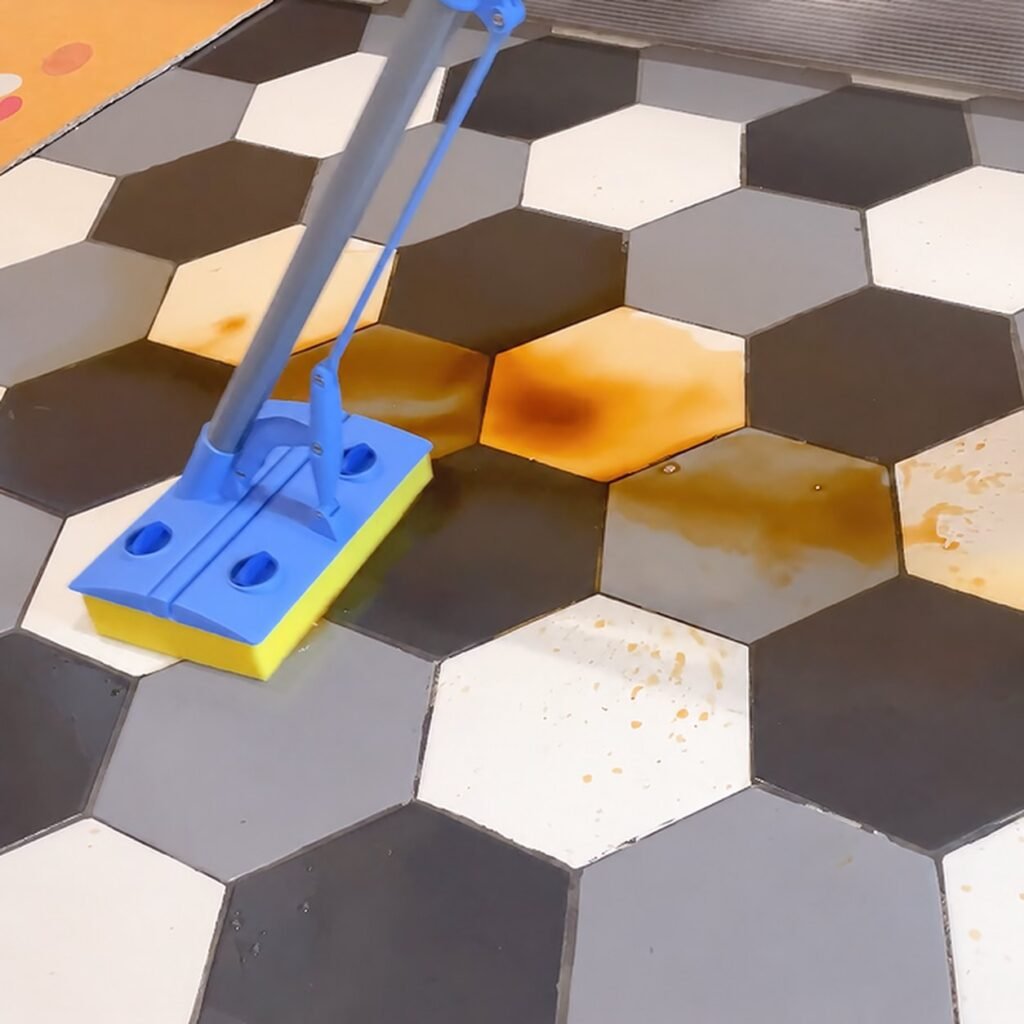
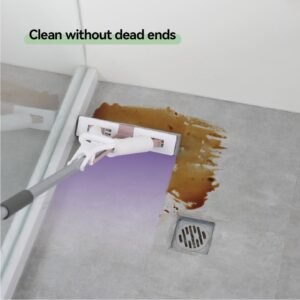
Wood-pulp sponge draws up standing liquid, which suits kitchen and bathroom tiles where spills and wet grout are the daily job. Fold the head to squeeze the sponge out, then go over the floor again.
Spill pick-up — the sponge soaks up standing liquid.
90–100% water removal — as rated by the factory; treat it as a best case.
03 · Into bathroom corners
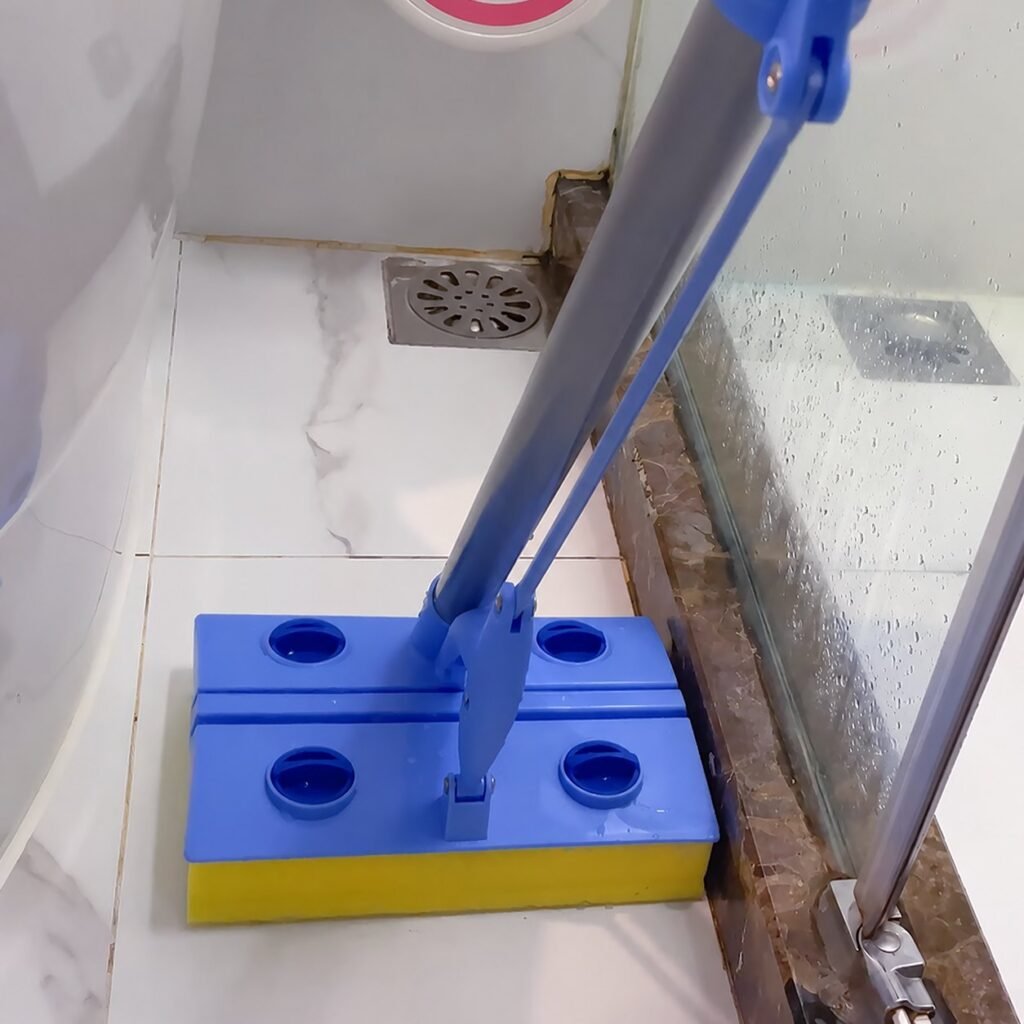
The square ends of the head run along shower screens, skirting and the edge of a floor drain, so the edges of a shower tray and the gaps by the glass get the same wipe as the open floor.
Your printed box, sleeve or label — from 2,000 sets
Graphics
Printed graphics to your artwork — from 2,000 sets
Colours
Head and pole colours to your brief — quoted per colourway
Pack contents
Number of spare sponges per set, or sponges sold as refills — quoted on request
Logo, printed packaging and graphics each start at 2,000 sets. A different sponge size or colour is quoted separately.
With six sponges in the set, this mop is sold partly on its refills: agree early how many spares go in the box and whether sponges are also packed on their own.
Tooling costs, timelines and what stays on your account are the same across every product and are set out once on OEM and private label.
Sponge mops are cube, not weight: carton size decides freight per unit more than the factory price does. Spare sponges pack flat beside the head, so six heads add little to the carton.
Sea freight is the sensible route for a full order; air freight on a boxed mop rarely makes commercial sense.
Trade terms, freight options and document sets are the same for every order and are set out once on ordering terms.